
- MSCs act as immune regulators: they sense inflammation and release signals that calm overactive immune cells and support repair.
- In a phase 3 trial, 70.4% of 54 children with steroid-refractory GVHD responded to an MSC product by day 28, and the FDA approved it in 2024.
- Newer research suggests MSCs keep calming inflammation even after the body clears them.
How do mesenchymal stem cells affect the immune system? They act less like replacement parts and more like peacekeepers. When MSCs land in an inflamed environment, they sense the inflammation and release signals that calm overactive immune cells, shift macrophages toward a repair mode and help tissue rebuild. That immune-calming effect is the main reason MSCs are being studied in so many different conditions.
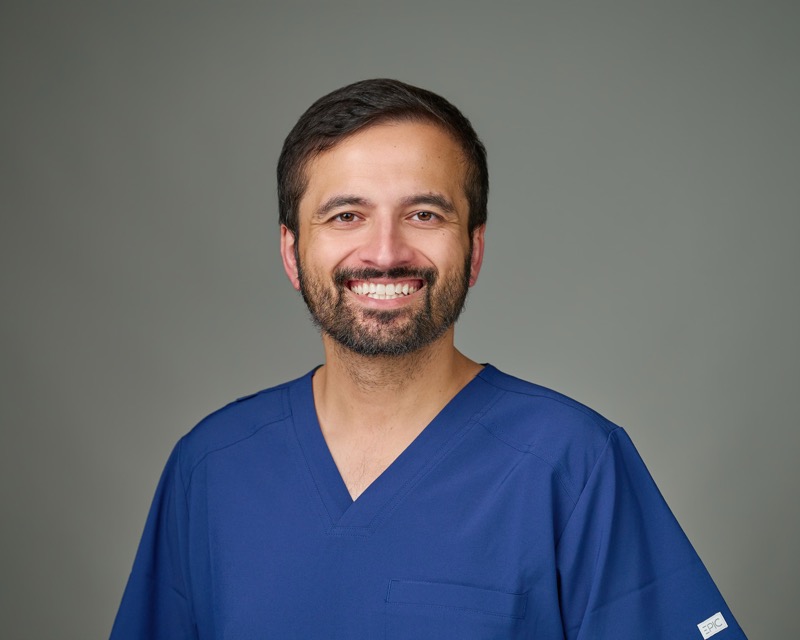
I'm Dr. Farhan Abdullah, Medical Director of Apex Regenerative Institute in Southlake, Texas. I'm also an internal medicine physician who still works in the hospital, so inflammation is the thing I spend most of my professional life chasing. When patients ask me how a single cell type could matter for a knee, a lung and a transplant complication all at once, the immune system is the honest answer.
This post walks through what the research actually shows: how MSCs talk to immune cells, the human trials that proved the effect is real, and the newer finding that MSCs may do some of their best work after they're gone. Fair warning, it gets a little nerdy. I'll keep it readable.
What do mesenchymal stem cells actually do to the immune system?
MSCs regulate inflammation. They don't switch the immune system off. They turn the volume down where it's too loud and support the repair side of the response, which is a very different thing from the broad suppression you get with steroids.
A widely cited 2018 review in Nature Reviews Nephrology by Shi and colleagues described it well: MSCs help damaged tissue reach a balanced inflammatory and regenerative environment, even in the middle of vigorous inflammation. They do that by releasing a mix of messengers, including immune-calming molecules, growth factors, chemokines and exosomes (the tiny vesicles we've written about in our explainer on exosomes).
Here's the part I find most elegant. The same review notes that MSCs' immune effects aren't constant. They're "licensed" by inflammatory signals. In plain English, MSCs read the room. In a calm environment they're fairly quiet. In an inflamed one, they get to work. That's a big reason researchers find them so appealing: they respond to what the tissue needs instead of doing the same thing everywhere.
The review also describes MSCs working on both arms of the immune system. The innate side is the fast, first-responder layer: macrophages, neutrophils and the like. The adaptive side is the slower, targeted layer built around T cells and B cells. MSCs can influence both, locally where they're placed and systemically through the signals they release. That breadth is unusual. Most anti-inflammatory drugs hit one target, and your body routes around it eventually, the way traffic finds a side street.
How do MSCs talk to immune cells?
Mostly through chemical signals, not by turning into new tissue. One of the clearest examples comes from the macrophage, the immune system's cleanup crew, which can either fuel inflammation or help resolve it.
In a 2009 study in Nature Medicine, Németh and colleagues at the NIH gave MSCs to mice with severe sepsis. The treated mice were more likely to survive and had better organ function. When the team dug into why, they found the MSCs released prostaglandin E2, which reprogrammed the animals' macrophages to make more interleukin-10, one of the body's main anti-inflammatory signals. When they removed the macrophages or blocked IL-10, the benefit disappeared.
That tells you something important. The MSCs weren't doing the work alone. They were persuading the body's own immune cells to change their behavior. I sometimes describe it to patients as the difference between a firefighter and a good dispatcher. The dispatcher doesn't hold the hose, but the whole response runs better.
The same paper made another point worth repeating: MSCs might be used without HLA (tissue) matching. That's one reason donor cells have become the norm in the field, which we cover in our guide to allogeneic vs autologous cells.
What did the human trials in graft-versus-host disease show?
Graft-versus-host disease (GVHD) is where the immune effect of MSCs was first put to a serious test in people. It's what happens when donor immune cells from a bone marrow transplant attack the patient's own body, and when steroids don't control it, it can be life-threatening.
In a 2008 phase II study in The Lancet, Le Blanc and a European transplant group treated 55 patients with severe, steroid-resistant acute GVHD using donor MSCs. Thirty had a complete response and nine more improved. No patients had side effects during or right after the infusions, and the response rate didn't depend on how well the donor was matched. The complete responders also had better two-year survival than those with a partial or no response.
Then came the children. A phase 3 study published in 2020 in Biology of Blood and Marrow Transplantation by Kurtzberg and colleagues treated 54 children with steroid-refractory acute GVHD with an MSC product called remestemcel-L, twice weekly for four weeks. At day 28, 70.4% had responded, well above the preset 45% benchmark, and complete responses grew from 29.6% at day 28 to 44.4% by day 100. The authors reported no infusion-related toxicities.
In December 2024 the FDA approved that product, Ryoncil, for steroid-refractory acute GVHD in children 2 months and older, and called it the first FDA-approved MSC therapy. Outside that narrow pediatric approval, MSC therapy is still investigational and isn't FDA-approved to treat any disease or condition. The approval pathway is long, and it's moving. Ryoncil shows that, in at least one serious condition, the immune effect of MSCs has cleared the FDA's full approval bar.
Do MSCs need to survive to work?
Surprisingly, maybe not. One of the more fascinating findings of the last decade is that some of the immune-calming effect seems to start when MSCs are cleared by the body.
A 2017 study in Science Translational Medicine by Galleu and colleagues looked at this in mice with GVHD. The recipient's own cytotoxic immune cells triggered the infused MSCs to undergo programmed cell death, and that step turned out to be essential. Phagocytes then engulfed the dying MSCs and produced an enzyme called IDO, which drove the immune-calming effect. The team saw a striking parallel in patients with GVHD: people whose immune cells were more active against MSCs were the ones who responded.
That solves an old puzzle. Researchers had long noticed that MSCs are hard to find in the body after an infusion, yet the benefits show up anyway. It's a bit like a good teacher. Long after the lesson ends, the students keep doing what they were taught. We dig into the "where do the cells go" question in our post on whether injected stem cells stay in the joint.
What did MSCs do in severe, whole-body inflammation?
COVID-19 gave researchers a hard test case: acute respiratory distress syndrome (ARDS), where the immune response itself injures the lungs. A small randomized trial showed what MSCs' immune effect might look like in that setting.
In a double-blind phase 1/2a trial published in 2021 in Stem Cells Translational Medicine, Lanzoni and colleagues at the University of Miami randomized 24 people with COVID-19 ARDS to two IV infusions of umbilical cord MSCs (about 100 million cells each) or a vehicle infusion, on top of standard care. The infusions were safe, with no serious adverse events related to the cells. Inflammatory cytokines were significantly lower in the MSC group by day 6, and survival at one month was 91% in the MSC group compared with 42% in controls.
It was a small trial, and bigger ones have followed. Still, it's one of the clearest human pictures of the same idea we saw in the mouse studies: MSCs calming a runaway immune response while the body gets a chance to recover.
What could this mean for someone with chronic inflammation or joint pain?
The immune science is the common thread behind why MSCs are being studied for joints, spine, lungs, the heart and aging. Most chronic pain and degeneration involves some low-grade inflammation that never fully switches off. A cell that reads inflammation and nudges the body toward repair is a logical thing to test.
What I tell patients is that this is the "why" behind regenerative medicine. If you're 58 with a knee that's been angry for three years, the question isn't whether a cell will become new cartilage. It's whether calming that environment gives your body a better chance to do its own repair work. That's the conversation worth having with a physician who'll look at your imaging, history and goals.
A few questions make that conversation more useful. What's driving my inflammation, and has anything already calmed it? Would donor cells, my own cells, or something simpler fit my situation best? How will we measure whether it's working? A good regenerative physician should welcome all three, and if you bring your MRI on a thumb drive, even better.
It's also why the field keeps getting more interesting. Researchers are now studying subpopulations of MSCs, including Muse cells, the stress-enduring cells we compare in our post on Muse cells vs mesenchymal stem cells.
If you'd like to talk through how this research might apply to you, I'd be glad to sit down with you, in person in Southlake or by video if you're out of state. Start with a quick candidacy check and we'll take it from there.
Frequently asked questions
Do mesenchymal stem cells suppress the whole immune system?
No. Research describes MSCs as regulators rather than broad suppressors. Their immune effects are switched on by inflammatory signals, so they tend to act where inflammation is high, which is different from how steroids work.
How long do the immune effects of MSCs last?
The cells themselves are cleared fairly quickly, but their effects can outlast them. In the pediatric GVHD trial, complete responses kept increasing from day 28 to day 100, and the 2017 Galleu study showed that the body's handling of MSCs is part of what drives the calming effect.
Can donor MSCs cause rejection?
In the 2008 Lancet GVHD study, the response rate didn't depend on donor matching. That's one reason donor (allogeneic) MSCs are commonly given without tissue typing in published trials.
What is the difference between MSCs and exosomes for inflammation?
MSCs are living cells that respond to their environment and release many signals, including exosomes. Exosomes are the tiny packages those cells send out. Both are being studied for inflammation, and the choice depends on the goal and the person.
Are MSCs being studied for autoimmune conditions?
Yes. Because of their immune effects, MSCs are being studied in a range of inflammatory conditions. The 2018 Nature Reviews Nephrology review lists Crohn's disease, graft-versus-host disease, diabetic kidney disease and organ fibrosis among them, and that research is ongoing.
Medically reviewed by Farhan Abdullah, DO. This article is for education and isn't medical advice. Regenerative therapies discussed here are investigational and are not FDA-approved to treat, cure, or prevent any disease.
References
- Shi Y, Wang Y, Li Q, et al. Immunoregulatory mechanisms of mesenchymal stem and stromal cells in inflammatory diseases. Nat Rev Nephrol. 2018;14(8):493-507.
- Németh K, Leelahavanichkul A, Yuen PS, et al. Bone marrow stromal cells attenuate sepsis via prostaglandin E2-dependent reprogramming of host macrophages to increase their interleukin-10 production. Nat Med. 2009;15(1):42-49.
- Le Blanc K, Frassoni F, Ball L, et al. Mesenchymal stem cells for treatment of steroid-resistant, severe, acute graft-versus-host disease: a phase II study. Lancet. 2008;371(9624):1579-1586.
- Kurtzberg J, Abdel-Azim H, Carpenter P, et al. A phase 3, single-arm, prospective study of remestemcel-L, ex vivo culture-expanded adult human mesenchymal stromal cells for the treatment of pediatric patients who failed to respond to steroid treatment for acute graft-versus-host disease. Biol Blood Marrow Transplant. 2020;26(5):845-854.
- Galleu A, Riffo-Vasquez Y, Trento C, et al. Apoptosis in mesenchymal stromal cells induces in vivo recipient-mediated immunomodulation. Sci Transl Med. 2017;9(416):eaam7828.
- Lanzoni G, Linetsky E, Correa D, et al. Umbilical cord mesenchymal stem cells for COVID-19 acute respiratory distress syndrome: a double-blind, phase 1/2a, randomized controlled trial. Stem Cells Transl Med. 2021;10(5):660-673.
- U.S. Food and Drug Administration. FDA approves first mesenchymal stromal cell therapy to treat steroid-refractory acute graft-versus-host disease. December 18, 2024.