

- Where you get treated matters less than whether the clinic can clearly answer questions about the product, the procedure and aftercare.
- Rules for cell products vary widely across Latin America, so more of the checking falls on you when you travel.
- Compare the whole cost, including travel and follow-up, and get what's included in writing before you pay.
Should you go to Mexico or Panama for stem cell therapy, or get it done in Texas? The location matters less than the answers you get to a handful of questions: what exactly is in the vial, who made it and how it was tested, who places it and with what imaging, and who looks after you when you're home. A clinic anywhere that answers those clearly is worth considering. One that can't shouldn't get your deposit.
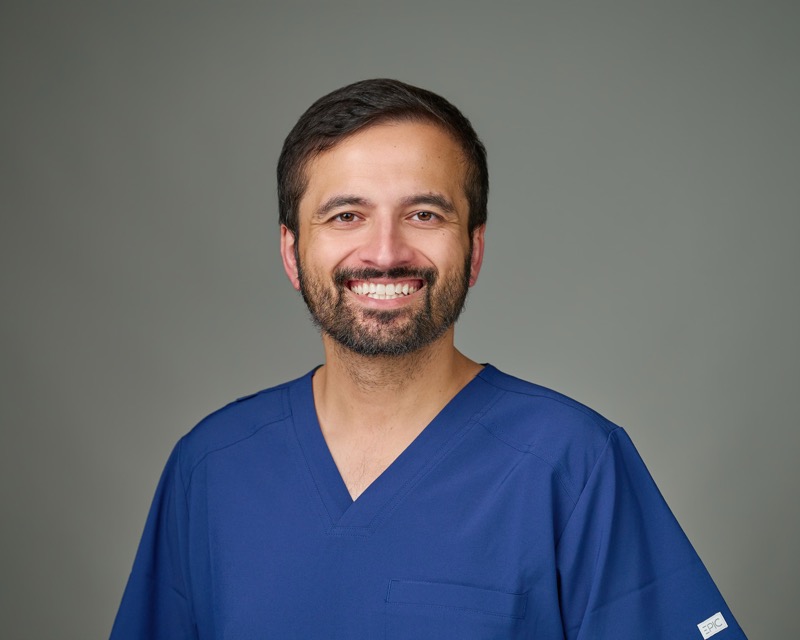
I'm Dr. Farhan Abdullah, Medical Director of Apex Regenerative Institute in Southlake, Texas. I run a regenerative clinic in the US, so I'm obviously not neutral on this one. That's exactly why I'm giving you the questions rather than a sales pitch. Ask them of every clinic on your list, including ours.
Here's why people look abroad in the first place, what the research says about the therapy itself, and the questions that separate a good plan from an expensive vacation.
Why do people travel to Mexico or Panama for stem cells?
Mostly it's access and price. Clinics abroad may advertise higher cell doses, IV infusions and conditions that US clinics are more careful about discussing. The marketing is polished, the packages bundle in a hotel, and the photos have palm trees in them. I get the appeal.
And the frustration behind it makes sense. If you've had two cortisone shots, a round of physical therapy and a surgeon telling you to come back when it's worse, you start looking further afield. Wanting options isn't naive. It's what motivated people do.
It's also not a fringe thing. A 2022 review in International Health named the USA, China, India, Thailand and Mexico as the leading countries in the international stem cell tourism market. Notice the US is on that list. This isn't a story about good borders and bad borders. It's about good clinics and careless ones, and both exist in every country.
There are skilled, careful physicians in Mexico and Panama. What changes when you cross a border is the rulebook the clinic plays by, and how much of the checking falls on you.
Is stem cell therapy worth pursuing at all?
For a lot of people, yes, it's worth a serious conversation. The research is real and it's growing. A 2025 Cochrane review pulled together 25 randomized trials with 1,341 participants in knee osteoarthritis. Compared with a placebo injection, people who got stem cell injections reported less pain and better function for up to six months, and they were about 29% more likely to report that the treatment was a success.
What I tell patients is that mesenchymal stem cells (MSCs) work mostly as signaling cells. They calm a joint's chronic inflammation and send out messages, including exosomes, that nudge the surrounding tissue toward repair. Think of them less as spare parts and more as a very persuasive foreman showing up at a stalled job site.
That mechanism is also why the details matter so much. A signaling cell only signals if it's alive, if it's the cell the label says it is, and if it lands in the tissue that needs it. Which brings us to the questions.
One plain note before we go on: stem cell therapy is investigational and not FDA-approved for any disease or condition. That's true at clinics in Texas, too. The approval pathway for cell therapies is long and still running, and the trials are getting bigger every year.
What should I ask about the cells themselves?
Start with the product, because it's the part you can't see and the part that varies most. Good questions:
- What tissue do the cells come from, and are they your own cells or donor cells? (If you want the trade-offs, our guide on allogeneic vs autologous cells walks through them.)
- How was the donor screened, and what infectious disease testing was done?
- Was the product tested for sterility, and can they show you the documentation for your lot?
- How many cells are in the dose, and how do they know? Was viability measured after thawing, or only at the factory?
- Where was it processed, and what quality standard does that lab follow?
A clinic that understands its product will answer these without flinching. A clinic that says "it's proprietary" to every one of them has answered a different question.
The rules behind those answers differ a lot from country to country. A 2022 review in Stem Cells and Development looked at cell therapy legislation across Latin America and found it very uneven. It reported that Brazil and Argentina had built regulations covering how cell products are manufactured and quality-checked, while Mexico, at the time, didn't recognize or authorize any cell as a therapy. The authors called for standardized rules precisely because the region is such a popular medical tourism destination. When the regulator isn't checking the lab, you have to.
What should I ask about the procedure?
Next, ask who's doing what, and how. In clinic, the question I hear most is about the cells. The question I wish I heard more is about placement.
- Who performs the injection or infusion? A physician, and what kind of training do they have?
- Will the injection be placed under ultrasound or fluoroscopy, or by feel?
- Did anyone review your imaging before quoting a plan?
- Is anything going into the spine, the spinal fluid or the eye? If so, why, and what's the safety record?
That last one isn't hypothetical. A 2024 report in the CDC's Morbidity and Mortality Weekly Report described a Colorado woman who developed meningitis from a drug-resistant mycobacterium after receiving donor embryonic stem cell injections into her spinal fluid at a clinic in Baja California in 2022. The CDC described it as a potential outbreak tied to stem cell clinics in Mexico. Donor embryonic cells, injected into the spinal fluid: those are exactly the details the product and procedure questions are designed to surface before you sign anything.
Also ask what happens on treatment day from start to finish, and how long you should stay nearby afterward. A clinic that wants you on a plane two hours after an injection is optimizing for its schedule, not your joint.
For a knee, hip or shoulder, imaging guidance is the standard I'd hold any clinic to. A cell that lands an inch from the target is a very expensive placebo.
Who takes care of me after I fly home?
This is the question people forget to ask, and it's the one I'd weigh most heavily if you're traveling. Regenerative treatments don't end at the injection. The response builds over weeks to months, and good care means someone is checking in, adjusting the plan and available if something feels off.
- Is there a scheduled follow-up, and is it in person or by video?
- If I have a reaction or an infection, who do I call, and will my doctor at home get the records?
- What exactly was injected, in writing, with lot numbers, so any future doctor knows?
- If I need to file a complaint, which licensing board oversees this physician?
Here's a quiet advantage of staying stateside: a Texas physician answers to the Texas Medical Board, and you can look up their license online in about two minutes. If you're within driving or short-flight distance of DFW, follow-up visits are a weekend, not an international trip.
How should I compare cost between Mexico, Panama and Texas?
Compare the whole bill, not the headline. A package abroad usually doesn't include flights, a companion's travel, extra hotel nights, time off work or the cost of any follow-up imaging and visits once you're home. Add those up before you decide the cheaper option is cheaper.
Then ask every clinic the same thing: what's included, in writing, before I pay? At Apex, a stem cell joint injection is a flat $4,500 per joint, and that includes the ultrasound-guided injection, PRP from your own blood, a Myers cocktail IV and follow-up visits at 3 and 6 months. It's all on our pricing page, because I think you should know the number before you walk in. Hold every clinic to that standard, including the ones with palm trees.
For the full checklist, including how to verify a physician's credentials and what a good first consultation looks like, see our guide on how to evaluate a regenerative clinic.
So, where should you go?
Go where the answers are clear. If a clinic in Mexico or Panama can show you how the cells were sourced and tested, who will place them and how, and who'll care for you afterward, it's a real option. If a clinic close to home can do the same, you've just saved yourself a passport line and a lot of airline coffee.
If you're weighing this decision now, bring your questions and your imaging to a free consultation with me in Southlake. If you're coming from out of state, we'll tell you what records and imaging to send ahead, and your 3- and 6-month follow-ups can be done by telehealth. I'll look at your situation honestly, walk you through what the research shows for your joint, and give you a clear plan and a clear price. Reach out here and let's talk it through.
Frequently asked questions
Is stem cell therapy legal in Mexico?
Clinics in Mexico do offer it, but the rules are different from the US. A 2022 review of Latin American cell therapy laws reported that Mexico, at the time, didn't recognize or authorize any cell as a therapy, which means much of the quality checking falls on the patient. Ask any clinic for documentation on sourcing, sterility testing and cell counts.
Is it safe to get stem cell therapy abroad?
It depends far more on the clinic than the country. The safety problems that have been published mostly involve products with unclear sourcing or sterility, and risky routes like injections into the spinal fluid. A clinic that can document its product, uses imaging guidance and has a real follow-up plan lowers those risks wherever it is.
Can I get follow-up care in the US after treatment in another country?
Often, yes, but plan it before you go. Get written records of exactly what was injected, including lot numbers and dose, so a doctor at home knows what they're dealing with. Some US physicians may be cautious about managing complications from a product they can't verify.
I live out of state. How does treatment at Apex work?
Treatment happens in person at our clinic in Southlake, which is a short drive from DFW Airport. Reach out first and we'll tell you what records and imaging to send ahead. Your follow-up visits at 3 and 6 months can be done by telehealth, with an in-person check timed around any return trip.
What paperwork should I ask a clinic for before treatment?
Ask for a written treatment plan, an itemized price, and documentation on the product: its source, donor screening, sterility testing and cell count. After treatment, ask for a record of exactly what was given, including lot numbers. A careful clinic will have all of this ready.
Medically reviewed by Farhan Abdullah, DO. This article is for education and isn't medical advice. Regenerative therapies discussed here are investigational and are not FDA-approved to treat, cure, or prevent any disease.
References
- Whittle SL, Johnston RV, McDonald S, et al. Stem cell injections for osteoarthritis of the knee. Cochrane Database Syst Rev. 2025;4(4):CD013342.
- Lyons S, Salgaonkar S, Flaherty GT. International stem cell tourism: a critical literature review and evidence-based recommendations. Int Health. 2022;14(2):132-141.
- Orozco-Solares TE, León-Moreno LC, Rojas-Rizo A, Manguart-Páez K, Caplan AI. Allogeneic mesenchymal stem cell-based treatment legislation in Latin America: the need for standardization in a medical tourism context. Stem Cells Dev. 2022;31(7-8):143-162.
- Nguyen MH, Hasan NA, De Moura VCN, et al. Notes from the field: potential outbreak of extrapulmonary Mycobacterium abscessus subspecies massiliense infections from stem cell treatment clinics in Mexico, Arizona and Colorado, 2022. MMWR Morb Mortal Wkly Rep. 2024;73(18):420-422.