

- Many degenerative meniscus tears in adults over 40 do well without surgery, according to two major randomized trials.
- In a randomized trial of donor stem cells after meniscectomy, 24% of the lower-dose group showed a meaningful increase in meniscus volume on MRI.
- Tears that lock the knee, and repairable traumatic tears in younger patients, still belong with a surgeon.
Can stem cells help a torn meniscus? For a lot of people over 40 with a wear-and-tear tear, surgery isn't the automatic first move it used to be, and the early stem cell research is encouraging. In one randomized trial, about one in four patients given donor stem cells after knee surgery showed a measurable increase in meniscus volume on MRI. Nobody in the comparison group did.
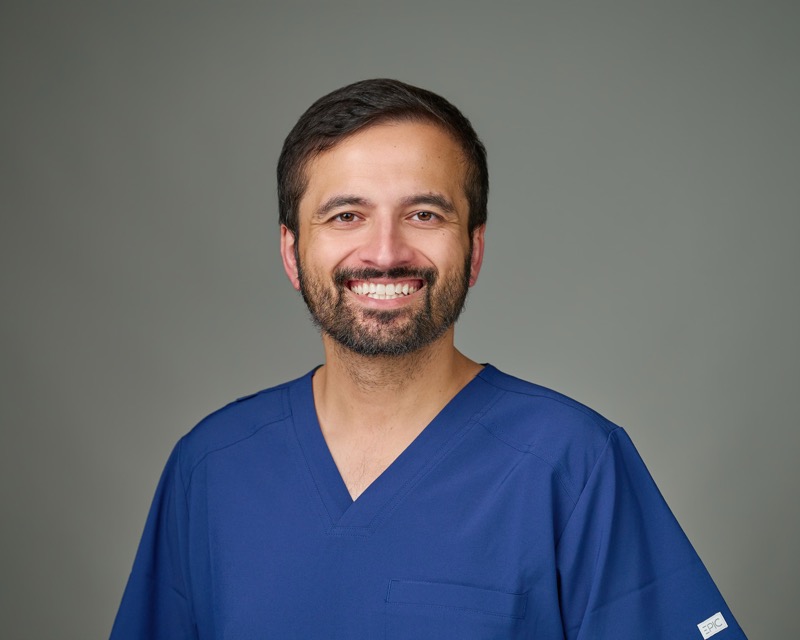
I'm Dr. Farhan Abdullah, Medical Director at Apex Regenerative Institute in Southlake, Texas. The meniscus question lands on my desk almost every week, usually from someone holding an MRI report with the word "tear" circled in pen. That word sounds dramatic. Often, it's less dramatic than it sounds.
This post walks through which meniscus tears tend to need a surgeon, which ones often do well without one, what the stem cell studies have found so far, and how I think about where regenerative options fit.
Does a torn meniscus always need surgery?
No. Whether a tear needs surgery depends far more on the type of tear and what your knee is doing than on the fact that the MRI found one. Many degenerative tears in people over 40 are managed without an operation, and two of the best surgical trials ever run are the reason why.
The first was a Finnish trial published in the New England Journal of Medicine in 2013. Researchers took 146 people between 35 and 65 with a degenerative medial meniscus tear and no arthritis, and randomly assigned them to either an arthroscopic partial meniscectomy or a sham operation, where the surgeon made the same small incisions but didn't trim anything. A year later, both groups had improved, and the sham group did just as well as the real surgery group on every main measure. That's a remarkable result for one of the most common orthopedic procedures in the world.
The second, the MeTeOR trial, also in the New England Journal of Medicine in 2013, looked at 351 people aged 45 and older with a meniscus tear plus mild to moderate arthritis. Half got surgery and physical therapy, half got a structured physical therapy program. At six months, function improved by similar amounts in both groups. About 30% of the therapy group did eventually choose surgery, which tells you something useful: starting with a non-surgical plan didn't close the door on an operation later.
Here's how I put it to patients. After about age 40, a lot of knees have some meniscus fraying on MRI, including knees that don't hurt at all. The tear is real. Whether it's the reason you're hurting is a separate question, and it's the one that matters.
Which meniscus tears really need a surgeon?
Tears that mechanically block the knee belong with a surgeon. If your knee truly locks and won't straighten, or a flap of meniscus is catching in the joint, that's a mechanical problem, and moving a loose piece of cartilage out of the way is a job for a surgeon's tools.
The same goes for a younger patient with a fresh, traumatic tear in the part of the meniscus that has good blood supply, especially when it comes with an ACL injury. Those tears can often be repaired with sutures, and repairing a meniscus is usually better for the knee long term than removing part of it. If that's you, I'd rather you see a good sports surgeon this month than read blog posts about stem cells.
Where regenerative medicine gets interesting is the large middle group:
- Adults, usually 40 and up, with a degenerative or "complex" tear found on MRI
- Pain and swelling, but no true locking
- Some early arthritis showing up alongside the tear
- Pain that's lingered after physical therapy, a cortisone shot, or both
- People who've already had a partial meniscectomy and still have symptoms
Our guide to regenerative therapy and surgery covers how these options sit alongside an operation rather than against one. Plenty of my patients have a surgeon and a regenerative physician, and they're better off for it.
What does the research show for stem cells and the meniscus?
The most-cited human study is a randomized, double-blind trial published in the Journal of Bone and Joint Surgery in 2014 by Vangsness and colleagues. It's worth knowing in some detail, because it's one of the few studies to use donor cells, the same general category of cell Apex uses.
Fifty-five patients at seven U.S. centers had a partial medial meniscectomy. Seven to ten days later, each got a single knee injection of one of three things: a lower dose of donor (allogeneic) mesenchymal stem cells, a higher dose, or a hyaluronic acid control. The team followed them for two years with repeat MRIs.
Here's what they found:
- At 12 months, 24% of the lower-dose group had a meaningful increase in meniscus volume on quantitative MRI, defined in advance as at least 15%. In the higher-dose group it was 6%.
- Nobody in the control group reached that 15% threshold.
- Patients who already had arthritic changes in the knee reported significantly less pain with stem cells than with the control.
- No unusual tissue growth or clinically important safety problems were found.
The authors concluded there was evidence of meniscus regeneration and improvement in knee pain. For a structure that has a famously poor blood supply, that's an exciting signal. (You may notice the lower dose did better than the higher dose. More isn't always more, which is a lesson that applies to cells, coffee, and cortisone shots.)
A 2021 systematic review in the European Review for Medical and Pharmacological Sciences pulled together 18 studies of stem cells for meniscus tears, 13 in the lab and 5 in patients. Every included study reported good results on lab markers, clinical scores, or imaging. The reviewers singled out bone marrow-derived stem cells delivered by injection as the most studied approach, with the most promising results, and called for larger, longer trials. Those trials are the natural next step, and the field is heading there.
I'll say this once, plainly: stem cell therapy is investigational and isn't FDA-approved for any orthopedic condition. The approval pathway for cellular products is long, and it's still running. The full regulatory picture is in this plain-English FDA guide.
How would stem cells help a meniscus?
Mostly by changing the environment inside the knee. Mesenchymal stem cells act less like spare parts and more like a project manager: they release signaling molecules that calm inflammation and recruit the knee's own repair cells to the job.
That matters for the meniscus in particular. The outer rim has a decent blood supply. The inner portion has very little, which is why tears there tend to linger and why surgeons often trim rather than repair them. A degenerative tear also sits in a joint that's usually inflamed, and that inflammatory soup is hard on cartilage and meniscus alike.
Across the lab and animal studies in that 2021 review, stem cells supported meniscus repair in a range of injury models. In people, the Vangsness trial's MRI findings are consistent with that. And the pain improvement in knees with early arthritis fits the anti-inflammatory side of the story, since a calmer joint is usually a more comfortable one.
This is also where Muse cells come up in conversation. They're a stress-enduring subpopulation of stem cells known for homing to injured tissue, and they're one of the most exciting areas in the field. Apex is the first clinic in Dallas-Fort Worth to offer Muse cell therapy, and I'm happy to talk through how they compare if you're curious.
What does a regenerative plan for a meniscus tear look like?
It starts with figuring out whether the meniscus is actually the pain generator. That means a hands-on exam, a look at your MRI images (not just the report), and a real conversation about what the knee does day to day. Does it catch? Swell after a long walk? Hurt on stairs, or when you twist to get out of the car?
If you're a candidate, treatment at Apex is image-guided, so the cells go where they're intended to go. Every stem cell treatment includes a PRP draw, and most plans pair the injection with a strengthening program, because the quadriceps and hip muscles are the knee's best shock absorbers and they work for free.
On cost, we publish our prices. A single-joint stem cell treatment is a flat $4,500, covering the physician evaluation, the ultrasound-guided injection, PRP from your own blood, a Myers cocktail IV, and follow-up at 3 and 6 months. HSA, FSA and 0% financing are available. The details are on our pricing page.
When someone flies in from Denver with an MRI on a thumb drive, this is the sorting I'm doing in the first fifteen minutes: Is this a mechanical tear that needs a surgeon? Is it a degenerative tear in a knee that's starting to show arthritis? Or is the meniscus a bystander and the pain is coming from somewhere else entirely? Each answer leads to a different plan.
Can stem cells help after a meniscectomy?
That's exactly the situation the Vangsness trial studied, so it's one of the more interesting groups to talk about. Every patient in that study had just had part of their meniscus removed, and the stem cell groups were the ones that showed increases in meniscus volume.
That matters because losing meniscus tissue changes how load travels through the knee. The meniscus works as a cushion and a load spreader, and with less of it, more force lands on the cartilage. It's one reason knees that have had a meniscectomy are a common source of later arthritis questions.
If you've had a meniscus trimmed and the knee never quite felt right afterward, you're not out of options. That's a very common reason people come to see me, and it's a conversation worth having with your imaging in hand.
A meniscus tear on an MRI can feel like a verdict. Most of the time it's a starting point. If you've been told you have a tear and you're weighing your options, bring your MRI and your questions. You can read more about meniscus injuries and how we discuss candidacy, or start with a quick candidacy check. Patients come to us in Southlake from across Dallas-Fort Worth and from out of state, and I'd be glad to sit down with you and figure out what your knee needs next.
Frequently asked questions
Can a torn meniscus heal on its own?
It depends on where the tear is. The outer rim has a blood supply and some tears there can settle down with time and rehab, while the inner portion has very little blood flow. Many degenerative tears stop causing symptoms with a good non-surgical plan, even if the MRI still shows the tear.
How long after a stem cell injection does knee pain improve?
Most patients notice gradual change over weeks to a few months rather than overnight, because the cells work by changing the joint's environment. In the main randomized meniscus trial, the MRI changes were measured at 12 months. We track progress at scheduled follow-ups so you're not guessing.
Is a stem cell injection for the knee painful?
Most people describe pressure and a deep ache that settles over a few days. It's a same-day, in-office procedure, and you walk out on your own. Plan on taking it easy for a couple of days afterward.
Can I have a stem cell injection if I've already had meniscus surgery?
Yes, that's a common situation. The best-known randomized trial of donor stem cells for the meniscus was done specifically in people who had just had a partial meniscectomy. Bring your operative report and recent imaging to your consultation.
Should I get an MRI before a consultation?
If you already have one, bring the images, not just the report. If you don't, we'll decide together after the exam whether one is worth getting. An X-ray is often useful too, because it shows how much joint space you have.
Medically reviewed by Farhan Abdullah, DO. This article is for education and isn't medical advice. Regenerative therapies discussed here are investigational and are not FDA-approved to treat, cure, or prevent any disease.
References
- Vangsness CT Jr, Farr J 2nd, Boyd J, et al. Adult human mesenchymal stem cells delivered via intra-articular injection to the knee following partial medial meniscectomy: a randomized, double-blind, controlled study. J Bone Joint Surg Am. 2014;96(2):90-98.
- Sihvonen R, Paavola M, Malmivaara A, et al. Arthroscopic partial meniscectomy versus sham surgery for a degenerative meniscal tear. N Engl J Med. 2013;369(26):2515-2524.
- Katz JN, Brophy RH, Chaisson CE, et al. Surgery versus physical therapy for a meniscal tear and osteoarthritis. N Engl J Med. 2013;368(18):1675-1684.
- Rinonapoli G, Gregori P, Di Matteo B, et al. Stem cells application in meniscal tears: a systematic review of pre-clinical and clinical evidence. Eur Rev Med Pharmacol Sci. 2021;25(24):7754-7764.