- Long COVID looks like an immune and blood vessel system stuck in alarm mode, which is why immune-calming MSCs are being studied for it.
- In a four-year follow-up of 148 severe COVID survivors, chronic fatigue-like syndrome showed up in 41.3% of those who got MSCs versus 66.1% of those who didn't.
- Smaller studies of MSC infusions and inhaled MSC exosomes in post-COVID patients reported improvements with no serious safety concerns.
Can stem cells help long COVID and chronic fatigue? The research is early, but some of it is genuinely encouraging. In a four-year follow-up published in 2026, survivors of severe COVID who had received mesenchymal stem cells (MSCs) were noticeably less likely to develop a chronic fatigue-like syndrome than survivors who hadn't. Smaller studies point the same direction.
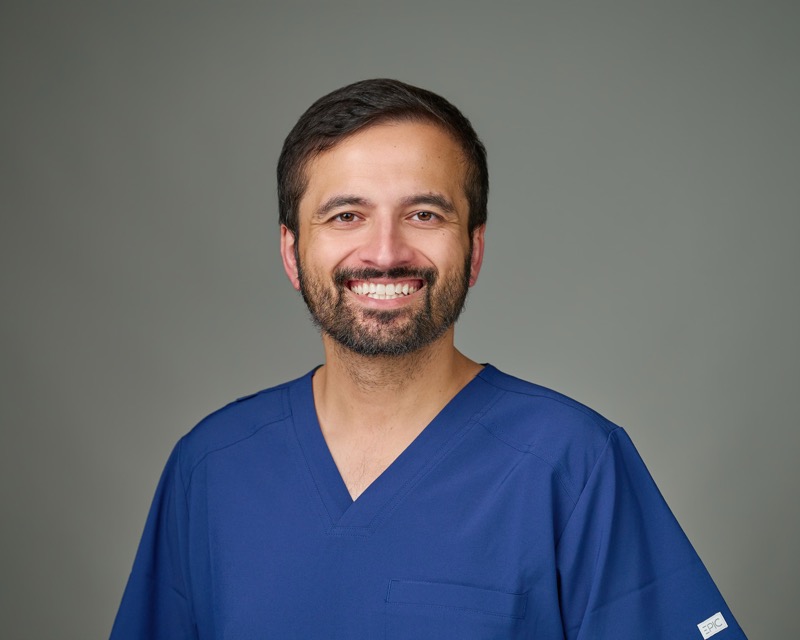
I'm Dr. Farhan Abdullah, Medical Director of Apex Regenerative Institute in Southlake, Texas. I'm also an internal medicine physician who still works in the hospital, which means I watched the pandemic up close and I've spent the years since meeting the people it left behind. They're often the most frustrated patients I see. Their labs look fine. Their scans look fine. They don't feel fine.
So here's where things stand: what long COVID seems to be at the cellular level, why MSCs and their exosomes keep coming up in this conversation, and what the human studies have actually found so far.
What is long COVID, and why does it look so much like chronic fatigue?
Long COVID (doctors also call it post-COVID-19 syndrome) is a cluster of symptoms that hang around for months after the infection itself is gone. Fatigue is the headline symptom, along with brain fog, breathlessness, poor sleep, aches and a heart rate that does odd things when you stand up.
The overlap with chronic fatigue syndrome (ME/CFS) is striking, and it's not just the symptoms. In the 2026 follow-up study I'll walk through below, a chronic fatigue-like pattern was the single most common form of post-COVID syndrome, showing up in about half of the 148 severe COVID survivors the researchers followed. The same paper estimates post-COVID syndrome affects around 10% of people infected worldwide. That's a lot of tired people.
What I tell patients is that long COVID isn't "in your head," and it isn't laziness. It's a real, measurable, whole-body problem. The frustrating part is that most standard tests weren't designed to see it.
What's actually going on in the body?
The best current picture is lingering inflammation and stress in the immune system and the lining of the blood vessels. The infection ends, but the alarm system doesn't fully stand down.
A 2026 study in the Journal of Allergy and Clinical Immunology from the University of Miami compared 73 people with long COVID against 41 people who'd recovered from COVID without lingering symptoms. The long COVID group had more stressed immune cells, far more cells shed from the blood vessel lining, showing signs of stress, and more clumping of immune cells and vessel-lining cells with platelets. The degree of cell stress tracked with how severe people's symptoms were and how much trouble they had with autonomic function (the automatic system that runs heart rate, blood pressure and digestion).
That matters for this conversation. If long COVID is driven, at least in part, by an immune system and a vascular system stuck in alarm mode, then a therapy that calms inflammation and supports blood vessel repair is a logical thing to study. Which brings us to MSCs.
Why are researchers studying stem cells for long COVID?
Because MSCs are, first and foremost, immune regulators. They read inflammatory signals and respond by releasing messengers that calm overactive immune cells and support repair. I covered the science in more depth in my post on how mesenchymal stem cells talk to the immune system, but the short version is that they act more like a skilled dispatcher than a replacement part.
A lot of what MSCs do runs through exosomes, the tiny vesicles they release that carry proteins and genetic signals from cell to cell. That's why you'll see both whole cells and MSC-derived exosomes (often called extracellular vesicles in the research) being tested in post-COVID patients.
There's also a bit of history here. Early in the pandemic, MSCs were tested in hospitalized patients with severe COVID lung injury. Those trials gave researchers something rare: groups of patients who got MSCs during the acute illness and could be followed for years afterward. That's where some of the most interesting long COVID data has come from.
What have the human studies found so far?
Three lines of research stand out: long-term follow-up of patients who got MSCs during severe COVID, a small study of MSC infusions given to people who already had long COVID, and an early exosome study aimed at one of long COVID's most stubborn symptoms.
A four-year look at chronic fatigue after MSC treatment
The 2026 study in the Journal of Translational Medicine, led by Pan and colleagues at the Chinese PLA General Hospital in Beijing, followed 148 survivors of severe COVID for four years. Ninety-two had received MSC therapy during their illness and 56 hadn't.
The fatigue finding is the one that caught my attention. A chronic fatigue-like syndrome showed up in 41.3% of the MSC group compared with 66.1% of the comparison group. That's a meaningful gap, and it held up four years out. The MSC group also scored better on an emotional well-being measure of the SF-36 quality-of-life survey, and the authors reported a favorable long-term safety profile. Even better, the team used blood protein profiling to start mapping which biological pathways sit behind the different flavors of long COVID, which is exactly the kind of work that helps doctors figure out who's most likely to respond.
Three years after a placebo-controlled trial
Some of those same researchers published three-year results from their randomized, double-blind, placebo-controlled trial in Stem Cell Research & Therapy in 2025 (Yuan and colleagues). One hundred patients with severe COVID got either three infusions of umbilical cord-derived MSCs or a placebo, on top of standard care.
Three years later, the MSC group rated its general health higher on the SF-36 (a score of 67 versus 50 for placebo), and slightly more of the MSC group had fully normal lung CT scans. Just as important for anyone weighing this kind of therapy, there was no increase in new complications or tumors in the MSC group over three years. Long-term safety data like that is hard to come by, and it's reassuring.
Treating people who already had long COVID
The follow-up studies above looked at people who got MSCs while they were acutely sick. What about someone who's already six months into the fatigue? A 2023 study in Stem Cell Research & Therapy by Vij and colleagues, run by a research group in Sugar Land, Texas, tested exactly that.
Ten adults with post-COVID-19 syndrome received five IV infusions of their own fat-derived MSCs over 14 weeks and were followed for 40 weeks. Their fatigue scores and symptom scores improved significantly from where they started, and so did several areas of their quality-of-life surveys. Side effects were mostly mild, with no serious adverse events and no harmful changes in their labs. Ten people is a small study, no question. But when a symptom has resisted everything else, a consistent improvement in fatigue is the kind of signal worth paying attention to.
Exosomes for the post-COVID cough
Anyone who's had the cough that won't quit after COVID knows how wearing it is. A 2026 pilot study in Frontiers in Medicine (Du and colleagues) gave patients with post-COVID chronic cough inhaled, nebulized extracellular vesicles from MSCs grown in a 3D culture system.
By day six, 22.5% of the treated group had a significant improvement compared with 5.0% of the control group, and the cough cleared faster on average (about 14 days versus 20). No safety concerns were reported. The lab work alongside it suggested the vesicles were nudging immune activity, which fits everything else we know about how they work. It's an early study, and the authors are already calling for larger trials, which is how this field moves forward.
What about chronic fatigue syndrome that didn't start with COVID?
Classic ME/CFS hasn't had much dedicated cell therapy research of its own yet, so the post-COVID research is currently the closest look we have. And it's a meaningful look, because the two conditions overlap so heavily in symptoms and, increasingly, in the immune and vascular findings researchers are uncovering.
If you've lived with chronic fatigue for years, I understand why that might sound like a long wait. My view is that long COVID has done one useful thing: it's pushed fatigue research up the priority list, with real funding and real trials. The insights coming out of these studies are likely to inform how we think about fatigue more broadly.
I'd be remiss not to mention Muse cells here. They're a stress-enduring subset of stem cells that, in published trials, have been given by IV without HLA (tissue) matching and appear to home toward injured tissue. They haven't been studied in long COVID yet, but they're one of the most exciting tools in the field, and Apex is the first clinic in Dallas-Fort Worth to offer Muse cell therapy. You can read more in our complete guide to Muse cells.
Is stem cell therapy approved for long COVID or chronic fatigue?
No. Stem cell and exosome therapies are investigational and not FDA-approved for long COVID, chronic fatigue syndrome or any other condition. The approval pathway for cell therapies is long, and it's still running: the studies above are exactly the kind of work that moves a therapy along it.
What that means in practice is that a careful physician should be straight with you about what's known, look at your whole picture and help you decide whether this is a reasonable thing to explore. It also means the product matters. Ask where the cells come from, how they're screened and if you're getting live cells. If a clinic can't answer those questions clearly, keep walking.
In clinic, the question I hear most from long COVID patients isn't "will this fix me?" It's "is anyone actually taking this seriously?" The answer, increasingly, is yes.
Who might be a good fit for a conversation about this?
Usually someone whose fatigue has lasted months, who's already had a thorough medical workup and who wants to understand every option on the table. Before anything regenerative, I want to make sure we haven't missed something treatable, like thyroid problems, anemia, sleep apnea or medication side effects. That's the internist in me, and I'm not going to apologize for it.
From there, we talk through what the research shows, what's realistic and what fits your goals. We go deeper on that evaluation on our chronic fatigue page, where we discuss candidacy. Plenty of the people I talk to are researching from out of state, and that's fine. A thorough first conversation doesn't require you to live down the road from Southlake.
If you've been running on empty since COVID, or longer, you're not imagining it and you're not out of options. The science on how stem cells and exosomes calm the immune system is moving quickly, and the people studying long COVID are finally getting answers. If you'd like to talk through your history and whether regenerative medicine makes sense for you, start with a candidacy review. Bring your labs, bring your questions, and bring whatever energy you've got left. I'll bring the coffee.
Frequently asked questions
How many stem cell infusions were used in the long COVID studies?
It varied. In the 2023 Texas study of people who already had long COVID, participants received five IV infusions of their own fat-derived MSCs over 14 weeks. In the placebo-controlled trial of patients hospitalized with severe COVID, patients received three infusions of umbilical cord-derived MSCs over six days.
Are donor (umbilical cord) cells or my own cells better for long COVID?
Both have been studied in COVID research: the long-term follow-up trials used donor umbilical cord MSCs, and the 2023 Texas study used patients' own fat-derived cells. Donor cells skip the fat or bone marrow harvest and come from young tissue, which is a big reason they've become common in the field.
Can exosomes help with brain fog after COVID?
Exosome research in long COVID is still early, and the first published pilot study focused on the post-COVID cough rather than brain fog. Because exosomes carry many of the immune-calming signals MSCs release, researchers are interested in them for other post-COVID symptoms too.
How long after COVID should I wait before considering regenerative therapy?
There's no fixed rule. Many symptoms improve on their own in the first few months, so most physicians want to see a persistent pattern and a complete medical workup first. A consultation is a good place to sort out timing for your situation.
Is it safe to have stem cell therapy if I still have lingering COVID symptoms?
In the published studies, MSC infusions were generally well tolerated: the Texas long COVID study reported mostly mild side effects and no serious adverse events, and the three-year trial follow-up found no increase in new complications or tumors. Your own safety depends on your health history, which is why a careful screening visit comes first.
Medically reviewed by Farhan Abdullah, DO. This article is for education and isn't medical advice. Regenerative therapies discussed here are investigational and are not FDA-approved to treat, cure, or prevent any disease.
References
- Pan Y, Yuan M, Song L, et al. Mesenchymal stromal cell therapy for post-COVID-19 syndrome: associated impact and mechanism. J Transl Med. 2026;24(1):435.
- Yuan MQ, Song L, Wang ZR, et al. Long-term outcomes of mesenchymal stem cell therapy in severe COVID-19 patients: 3-year follow-up of a randomized, double-blind, placebo-controlled trial. Stem Cell Res Ther. 2025;16(1):94.
- Vij R, Kim H, Park H, et al. Adipose-derived, autologous mesenchymal stem cell therapy for patients with post-COVID-19 syndrome: an intermediate-size expanded access program. Stem Cell Res Ther. 2023;14(1):287.
- Du J, Wang Y, Wang H, et al. A pilot study of nebulized 3D-cultured mesenchymal stem cell-derived extracellular vesicles for the treatment of post-COVID-19 chronic cough. Front Med (Lausanne). 2026;13:1809451.
- Dias CC, Condor Capcha JM, Robleto E, et al. Necroptosis and cellular stress characterize immune and endothelial dysfunction in long COVID. J Allergy Clin Immunol. 2026;158(5):1419-1430.e4.